Landslide Susceptibility, Risk Assessment, and Mitigation Strategies in Africa: A Systematic Review and Meta-Analysis
Keywords:
Landslide Susceptibility Mapping, Landslide Risk Assessment, Hazard Mitigation Strategies, Geospatial and Remote Sensing Techniques, Environmental and Socio-economic DriversAbstract
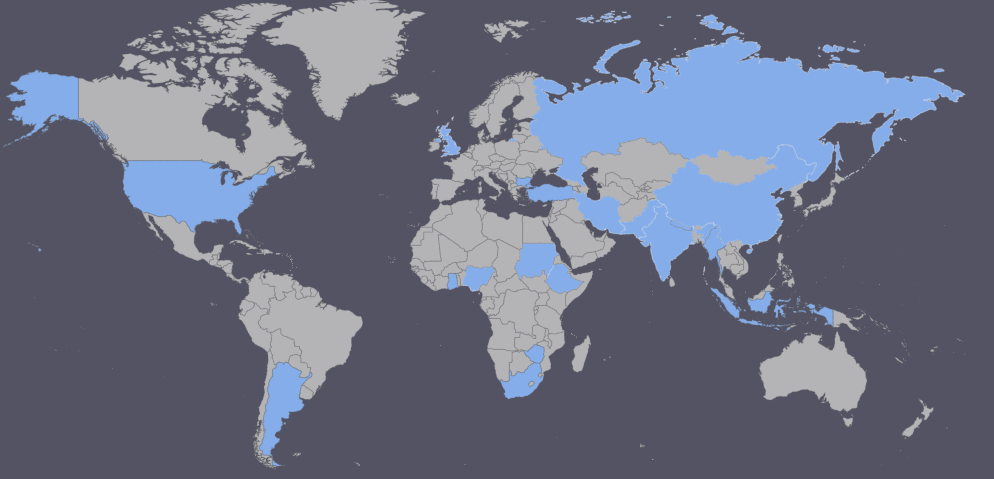
Landslides are a major environmental hazard across Africa, threatening lives, infrastructure, and sustainable development. Their increasing frequency is driven by climate extremes, fragile geology, and rapid, unregulated urbanisation. This study conducts a systematic review and meta-analysis of 33 peer-reviewed publications (2010–2025) to evaluate the state of landslide research in Africa. The objectives were to assess susceptibility and risk assessment models, identify dominant environmental and human risk factors, and compare mitigation strategies across regions. Using the PRISMA framework, data was extracted from multiple databases and analysed through both quantitative and qualitative integration. Results show that rainfall, slope gradient, and lithology are the main determinants of landslide susceptibility, while deforestation, mining, and informal urban expansion amplify risk. Traditional GIS–AHP models achieved mean accuracies of 82%, whereas advanced machine learning and hybrid approaches (RF, FAHP, XAI) attained 88–92%, reflecting improved predictive reliability. East and North Africa exhibit the highest hazard densities due to steep terrain and high rainfall, while Central Africa remains data deficient. Despite methodological progress, fewer than 20% of studies influence national disaster risk reduction (DRR) policies, exposing a persistent science–policy gap. The study highlights the need for evidence-based, data-driven, and inclusive risk management. Strengthening geospatial data infrastructure, integrating scientific research into land-use planning, and enhancing community participation are critical for resilience. These efforts align with the Sendai Framework (2015–2030) and Sustainable Development Goals (SDGs 11, 13, and 15) to advance proactive and climate-resilient landslide risk governance in Africa.
References
Abernethy, K., Maisels, F., White, L.J.T., 2016. Environmental Issues in Central Africa. Annual Review of Environment and Resources 41, 1-33. https://doi.org/10.1146/annurev-environ-110615-085415.
Ahmed, B., 2021. The Root Causes of Landslide Vulnerability in Bangladesh. Landslides 18, 1707-1720. https://doi.org/10.1007/s10346-020-01606-0.
Alcantara-Ayala, I., 2025. Landslides in a Changing World. Landslides 22, 2851-2865. https://doi.org/10.1007/s10346-024-02451-1.
Austin, K.F., 2019. The Political Economy of Landslides and International Aid Relief: A Qualitative Investigation in Rural Uganda. Journal of Political Ecology 26, 720-737.
Bahavira, J.M., 2025. Analytic Hierarchy Process with GIS and Remote Sensing for Natural-Hazard Susceptibility Assessment: Applications, Trends, and Lessons for Kinshasa. Revue Internationale de la Recherche Scientifique 3 (5), 4441-4457. https://doi.org/10.5281/zenodo.17073034.
Barchi, F., Winter, S.C., 2020. Non-Partner Violence in Sub-Saharan African and the Built Environment: A Multicountry Analysis of the Effects of Sanitation, Water Access, and Urban Settings. Violence Against Women 26 (10), 1101-1119. https://doi.org/10.1177/1077801219853370.
Barry, A.A., Caesar, J., Tank, A.M.G.K., Aguilar, E., McSweeney, C., Cyrille, A.M., Nikiema, M.P., Narcisse, K.B., Sima, F., Stafford, G., Touray, M., Ayilari‐Naa, J.A., Mendes, C.L., Tounkara, M., Gar‐Glahn, e.v.S., Coulibaly, M.S., Dieh, M.F., Mouhaimouni, M., Oyegade, J.A., Sambou, E., Laogbessi, E.T., 2018. West Africa Climate Extremes and Climate Change Indices. International Journal of Climatology 38 (1), e921-e938. https://doi.org/10.1002/joc.5420.
Bouaoud, M., Mezhoud, S., 2025. A New Approach for Assessing Landslide Vulnerability at the Urban Scale: The Case of the City of Constantine, Algeria. Scientific Review Engineering and Environmental Sciences 34 (3), 241-260. https://doi.org/10.22630/srees.10432.
Bourenane, H., Bouhadad, Y., 2021. Impact of Land Use Changes on Landslides Occurrence in Urban Area: The Case of the Constantine City (NE Algeria). Geotechnical and Geological Engineering 39 1-21. https://doi.org/10.1007/s10706-021-01768-1.
Buontempo, C., Mathison, C., Jones, R., Williams, K., Wang, C., McSweeney, C., 2015. An Ensemble Climate Projection for Africa. Climate Dynamics 44, 2097-2118. https://doi.org/10.1007/s00382-014-2286-2.
Capobianco, V., Choi, C.E., Crosta, G., Hutchinson, D.J., Jaboyedoff, M., Lacasse, S., Nadim, F., Reeves, H., 2025. Effective Landslide Risk Management in Era of Climate Change, Demographic Change, and Evolving Societal Priorities. Landslides 22, 2915-2933. https://doi.org/10.1007/s10346-024-02418-2.
Chaabane, F.Z., Lamine, S., Guettouche, M.S., Bachari, N.E.I., Hallal, N., 2024. Landslide Risk Assessments Through Multicriteria Analysis. International Journal of Geo-Information 13 (303), 1-27. https://doi.org/10.3390/ijgi13090303.
Collins, J.M., 2011. Temperature Variability Over Africa. Journal of Climate 24, 3649-3666. https://doi.org/10.1175/2011JCL13753.1.
Conway, D., 2011. Adapting Climate Research for Development in Africa. WIREs Climate Change 2, 428-450. https://doi.org/10.1002/wcc.115.
Dahmani, L., Laaribya, S., Naim, H., Tunguz, V., Dindaroglu, T., 2024. Assessing Landslide Susceptibility in Chefchaouen, Morocco: An Application of the Landslide Numerical Risk Factor Method for Sustainable Urban Development and Disaster Risk Management. Biosystems Diversity 32 (3), 389-397. https://doi.org/10.15421/012442.
Davies, T.C., 2015. Urban Geology of African Megacities. Journal of African Earth Sciences 110, 188-226. http://dx.doi.org/10.1016/j.jafrearsci.2015.06.012.
Davison, I., Steel, I., 2018. Geology and Hydrocarbon Potential of the East African Continental Margin: A Review. Petroleum Geoscience 24, 57-91. https://doi.org/10.1144/petgeo2017-028.
Dewitte, O., Dille, A., Depicker, A., Kubwimana, D., Mateso, J.C.M., Bibentyo, T.M., Uwihirwe, J., Monsieurs, E., 2020. Constraining Landslide Timing in a Data-Scare Context: From Recent to Very Old Processes in the Tropical Environment of the North Tanganyika-Kivu Rift Region. Landslides 18, 161-177. https://doi.org/10.1007/s10346-020-01452-0.
Frodella, W., Rosi, A., Spizzichino, D., Nocentini, M., Lombardi, L., Ciampalini, A., Vannocci, P., Ramboason, N., Margottini, C., Tofani, V., Casagli, N., 2022. Integrated Approach for Landslide Hazard Assessment in the High City of Antananarivo, Madagascar (UNESCO Tentative Site). Landslides 19, 2685-2709. https://doi.org/10.1007/s10346-022-01933-4.
Gemeda, D.O., Sima, A.D., 2015. The Impacts of Climate Change on African Continent and the Way Forward. Journal of Ecology and the Natural Environment 7 (10), 256-265. https://doi.org/10.5897/JENE2015.0533.
Hossain, T., Tushar, M.A.N., Murshed, S., Basak, U., Islam, M.A., 2024. Landslide Studies in the Context of Disaster Management in Bangladesh – A Systematic Literature Review. Earth 5, 784-811. https://doi.org/10.3390/earth504004 1.
Hulme, M., Doherty, R., Ngara, T., New, M., Lister, D., 2001. African Climate Change: 1900-2100. Climate Research 17, 145-168.
Jian-Ping, L., Xiao-Hua, P., Jun, M., Zuo-Ji, T., Yong-Jin, C., Lun-Kun, W., 2008. Petroleum Geology and Resources in West Africa: An Overview. Petroleum Exploration and Development 35 (3), 378-384.
Kanyiginya, V., Twongyirwe, R., Mubiru, D., Michellier, C., Ashepet, M.G., Kagoro-Rugunda, G., Kervyn, M., Dewitte, O., 2025. Historicizing Natural Hazards and Human-Induced Landscape Transformation in a Tropical Mountainous Environment in Africa: Narratives from Elderly Citizens. Land 14 (346), 1-33. https://doi.org/10.3390/land14020346.
Katutu, R., Nyamweha, B.R., Kabaseke, C., Koojo, M.S., Sekajugo, J., Martens, K., Jacobs, L., Maes, J., Kervyn, M., 2019. Study of Natural Disasters and of their Impact on the Environmental Condition Rwenzori Mountain Region. Technogenic and Ecological Safety 5 (1), 31-37. https://doi.org/10.5281/zenodo.2582759.
Kiremeji, M., Eliakimu, E., Sawe, H., Sindato, C., Samwel, A.J., Heller, J., Kwesi, E.m., Slyvanus, E., Ubuguyu, O., Jingu, J., 2025. Public Health Emergency Response and Recovery in Limited Resource Setting: Lesson Learned from Hanang District Floods and Landslide in Tanzania. Disaster Medicine and Public Health Preparedness 19 (e49), 1-6. https://doi.org/10.1017/dmp.2025.39.
Kucharczyk, M., Hugenholtz, C.H., 2021. Remote Sensing of Natural Hazard-Related Disasters with Small Drones: Global Trends, Biases, and Research Opportunities. Remote Sensing of Environment 264 (112577), 1-13. https://doi.org/10.1016/j.rse.2021.112577.
Kumi-Boateng, B., Peprah, M.S., Larbi, E.K., 2020. Landslide Susceptibility Hazard Prone Areas Identification Using Multi-Criteria Decision Analysis (MCDA) and GIS Techniques: A Case Study of Tarkwa and Its Environs. Journal of Geomatics 14 (2), 155-170.
Kwesi, E.A.A., Asamoah, K.N., Arthur, F.A., Kwofie, J.A., 2022. Mapping of Land Subsidence Vulnerability – A Case Study at the Tarkwa Nsuaem Municipality of Ghana. Proceedings of the 7th UMaT Biennial International Mining and Mineral Conference, Tarkwa, Ghana, 1-11.
Maes, J., Kervyn, M., de Hontheim, A., Dewitte, O., Jacobs, L., Mertens, K., Vanmaercke, M., Vranken, L., Poesen, J., 2017. Landslide Risk Reduction Measures: A Review of Practices and Challenges for the Tropics. Progress in Physical Geography 41 (2), 191-221. https://doi.org/10.1177/0309133316689344.
Maes, J., Molombe, J.M., Mertens, K., Parra, C., Poesen, J., Che, V.B., Kervyn, M., 2019. Socio-Political Drivers and Consequences of Landslide and Flood Risk Zonation: A Case Study of Limbe City, Cameroon. EPC: Politics and Space 37 (4), 707-731. https://doi.og/10.1177/2399654418790767.
Mahe, G., Lienou, G., Descroix, L., Bamba, F., Paturel, J.E., Laraque, A., Meddi, M., Habaieb, H., Adeaga, O., Dieulin, C., Kotti, F.C., Khomsi, K., 2013. The Rivers of Africa: Witness of Climate Change and Human Impact on the Environment. Hydrological Processes 27, 2105-2114. https://doi.org/10.1002/hyp.9813.
Manyena, S.B., 2012. Disaster and development paradigms: too close for comfort?. Development Policy Review 30 (3), 327-345.
Mason, S.J., 2001. El Nino, Climate Change, and Southern African Climate. Environmetrics 12, 327-345. https://doi.org/10.1002/env.476.
McCourt, S.., Armstrong, RA., Grantham, G.H., Thomas, R.J. 2006. Geology and Evolution of the Natal Belt, South Africa. Journal of African Earth Sciences 46, 71-92. https://doi.org/10.1016/j.jafrearsci.2006.01.013.
Meque, R., Cristovao, L., Chichango, F., 2023. Socio-Environmental Impacts Caused by Tropical Cyclones Idai and Eloise in Sussundenga District, Mozambique. Research, Society and Development 12 (14), e72121440818. http://dx.doi.org/10.33448/rsd-v12i14.40818.
Mercer, C., Mohan, G., Power, M., 2003. Towards a Critical Political Geography of African Development. Geoforum 34, 419-436.
Michellier, C., Pigeon, P., Kervyn, F., Wolff, E., 2016. Contextualizing Vulnerability Assessment: A Support to Geo-Risk Management in Central Africa. Natural Hazards 82, 27-42. https://doi.org/10.1007/s11069-016-2295-z.
Monsieurs, E., Jacobs, L., Michellier, C., Tchangaboba, J.B., Ganza, G.B., Kervyn, F., Mateso, J.C.M., Bibentyo, T.M., Buzera, C.K., Nahimana, L., Ndayisenga, A., Nkurunziza, P., Thiery, W., Demoulin, A., Kervyn, M., Dewitte, O., 2018. Landslide Inventory for Hazard Assessment in a Data-Poor Context: A Regional-Scale Approach in a Tropical African Environment. Landslides 15, 2195–2209. https://doi.org/10.1007/s10346-018-1008-y.
Myers, G.A., 2014. Toward Expanding Links Between Political Geography and African Studies. Geography Compass 8 (2), 125-136. https://doi.org/10.1111/gee3.12116.
Nahayo, L., Ndayisaba, F., Karamage, F., Nsengiyumva, J.B., Kalisa, E., Mind’je, R., Mupenzi, C., Li, L., 2018. Estimating Landslides Vulnerability in Rwanda Using Analytical Hierarchy Process and Geographic Information System. Integrated Environmental Assessment and Management 15 (3), 364-373. https://doi.org/10.1002/ieam.4132.
Nicholson, S.E., 2017. Climate and Climatic Variability of Rainfall Over Eastern Africa. Reviews of Geophysics 55, 590-635. https://doi.org/10.1002/2016RG000544.
Nsabimana, J., Henry, S., Ndayisenga, A., Kubwimana, D., Dewitte, O., Kervyn, F., Michellier, C., 2023. Geo-Hydrological Hazard Impacts, Vulnerability and Perception in Bujumbura (Burundi): A High-Resolution Field-Based Assessment in a Sprawling City. Land 12 (1876), 1-26. https://doi.org/10.3390/land12101876.
Oliver-Smith, A., 2022. Critical disaster studies: the evolution of a paradigm. In A decade of disaster experiences in Ōtautahi Christchurch: critical disaster studies perspectives (pp. 27-53). Singapore: Springer Nature Singapore.
Omar, M.A., Etebaai, I., Taher, M., Tawfik, A., 2025. Landslide Susceptibility Mapping in the Bokoya Massif, Northern Morocco: A Geospatial and Multi Factor Analysis Using the Analytic Hierarchy Process (AHP). Scientific African, 30(e02980):1-20. https://doi.org/10.1016/j.sciaf.2025.e02980.
Ondayo, M.A., Watts, M.J., Mitchell, C.J., King, D.C.P., Osano, O., 2023. Review: Artisanal Gold Mining in Africa-Environmental Pollution and Human Health Implications. Exposure and Health 16, 1067-1095. https://doi.org/10.1007/s12403-023-00611-7.
Platts, P., Omeny, P.A., Marchant, R., 2015. AFRICLIM: High-Resolution Projections for Ecological Applications in Africa. Africa Journal of Ecology 53 (1), 103-108. https://doi.org/10.111/aje.12180.
Priestley, K., McKenzie, D., Debayle, E., Pilidou, S., 2008. The African Upper Mantle and Its Relationship to Tectonics and Surface Geology. Geophys. Geophysical Journal International 175, 1108-1126. https://doi.org/10.1111/j.1365-246X.2008.03951.x.
Reddy, C.N., 2025. Explainable Artificial Intelligence (XAI) for Climate Hazard Assessment: Enhancing Predictive Accuracy and Transparency in Drought, Flood, and Landslide Modeling. International Journal on Science and Technology 16 (1), 1-15.
Taylor, R.G., Koussis, A.D., Tindimugaya, C., 2009. Groundwater and Climate in Africa – A Review. Hydrological Sciences Journal 54 (4), 655-664. https://doi.org/10.1623/hysj.54.4.655.
Traore, H.K., Lebant, S., Drogue, G., Kouadio, E.K., De Angeli, S., 2025. Flood and Landslide Risk Mapping Based on a Multi-Criteria Analysis (MCA) in Greater Abidjan (Cote d’Ivoire). EGUsphere, 1-37. https://doi.org/10.5194/egusphere-2025-2925.
Tynchenko, Y., Kukartsev, V., Tynchenko, V., Kurkartseva, O., Panfilova, T., Gladkov, A., Nguyen, V., Malashin, I., 2024. Landslide Assessment Classification Using Deep Neural Networks Based on Climate and Geospatial Data. Sustainability 16 (7063), 1-26. https://doi.org/10.3390/su16167063.
Venables, A.J., 2010. Economic Geography and African Development. Papers in Regional Science 89 (3), 469-483. https://doi.org/10.1111/j.1438-5957.2010.00312.x.
Warf, B., 2017. Geographies of African Corruption. PSU Research Review 1 (1), 20-38. https://doi.org/10.1108/PRR-12-2016-0012.
Downloads
Published
Issue
Section
License
Copyright (c) 2026 Michael Stanley Peprah, Edwin Kojo Larbi

This work is licensed under a Creative Commons Attribution-NonCommercial-NoDerivatives 4.0 International License.
The authors keep the copyrights of the published materials with them, but the authors are aggee to give an exclusive license to the publisher that transfers all publishing and commercial exploitation rights to the publisher. The puslisher then shares the content published in this journal under CC BY-NC-ND license.